Problem 22 · 2013 Math Kangaroo
Stretch
Geometry & Measurement
Fractions, Decimals & Percents
spatial-reasoning
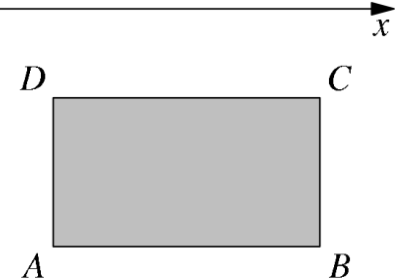
The sides of rectangle ABCD are parallel to the coordinate axes. The rectangle lies below the x-axis and to the right of the y-axis, as shown. The coordinates of A, B, C, D are all whole numbers. For each point we work out (y-coordinate) ÷ (x-coordinate). Which point gives the smallest value?
Show answer
Answer: A — A
Show hints
Hint 1 of 2
All x-coordinates are positive and all y-coordinates are negative, so y/x is always negative.
Still stuck? Show hint 2 →
Hint 2 of 2
To make a negative value smallest, you want the most-negative y over the smallest x.
Show solution
Approach: compare y/x at the four corners
- Each point has x > 0 and y < 0, so every y/x is negative.
- The smallest (most negative) value comes from the largest |y| with the smallest x.
- Corner A is the lowest-left point: smallest x together with the most negative y.
- So point A gives the smallest value.
Mark:
· log in to save