Problem 18 · 1994 AJHSME
Hard
Algebra & Patterns
graph-reading
Show answer
Answer: B — Graph B.
Show hints
Hint 1 of 2
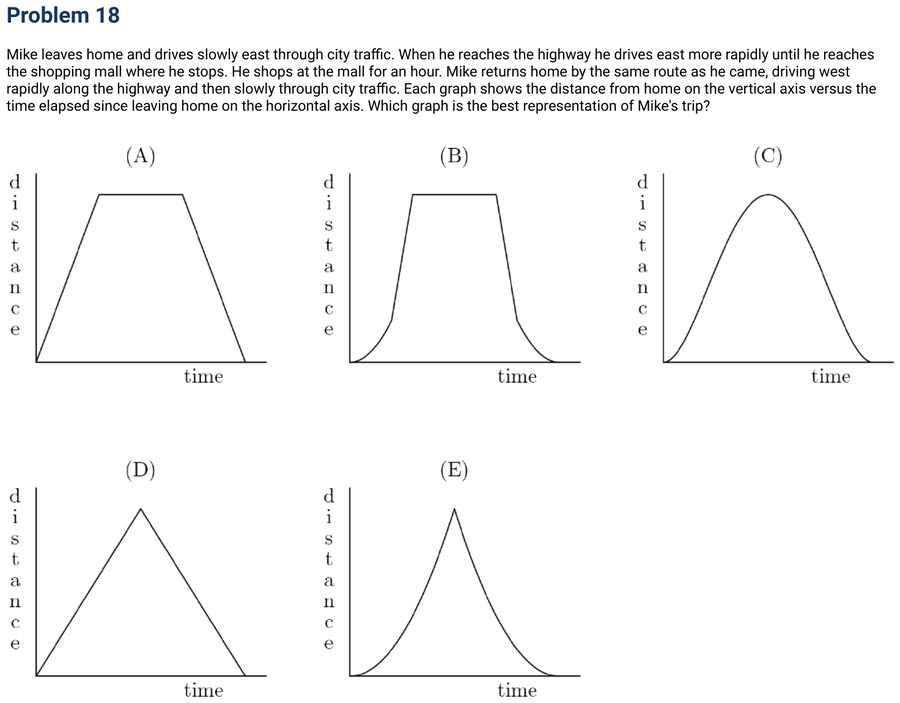
Read the SHAPE of the story, not numbers: distance-from-home goes UP while driving out, stays FLAT during the hour of shopping, then comes back DOWN. That flat top kills any graph without a level stretch (C, D, E).
Still stuck? Show hint 2 →
Hint 2 of 2
Now the tie-breaker between A and B: on a distance-vs-time graph, slope IS speed. Mike has TWO speeds each way (slow city, fast highway), so each side can't be a single straight line — its steepness must change partway.
Show solution
Approach: match each changing-speed leg to the graph's slope
- First filter on the overall shape: out (rising), shop (flat), back (falling). Only graphs with a flat plateau survive — that's A and B (C, D, E have a single peak, no time spent at the mall).
- Now use 'slope = speed.' Going out he's slow in the city (gentle rise) then fast on the highway (steep rise), so the outgoing side BENDS from shallow to steep — not one straight ramp. Coming home reverses: steep highway, then gentle city.
- Graph B shows each side bending between two slopes; graph A's straight sides would mean one single constant speed the whole way out and back, which contradicts the city-then-highway change.
- Reusable idea: on distance-time graphs, steeper = faster and flat = stopped. Treat 'match the graph' problems as a checklist — eliminate on the big features (flat? rising? falling?) first, then settle the survivors on the fine detail (straight vs. bending).
Mark:
· log in to save