Problem 14 · 2010 Math Kangaroo
Hard
Logic & Word Problems
sum-constraintcasework
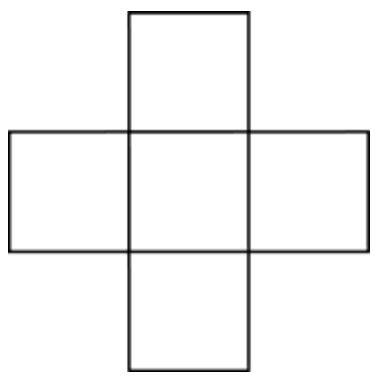
The numbers 1, 4, 7, 10 and 13 are to be written into the squares so that the sum of the three numbers in the horizontal row equals the sum of the three numbers in the vertical column. What is the largest possible value of these sums?
Show answer
Answer: E — 24
Show hints
Hint 1 of 2
The square in the middle belongs to both the row and the column, so it gets counted twice.
Still stuck? Show hint 2 →
Hint 2 of 2
Since the middle number is the one counted twice, putting the biggest number there makes both sums as large as possible.
Show solution
Approach: put the biggest number where it counts twice
- Both the row and the column share the centre square, so the centre number adds into both sums.
- Place the largest, 13, in the centre; the other four \(\{1, 4, 7, 10\}\) split into two equal pairs \(1 + 10 = 4 + 7 = 11\).
- Each line is then \(11 + 13 = 24\), so the largest possible sum is 24 (answer E).
Mark:
· log in to save